Open post

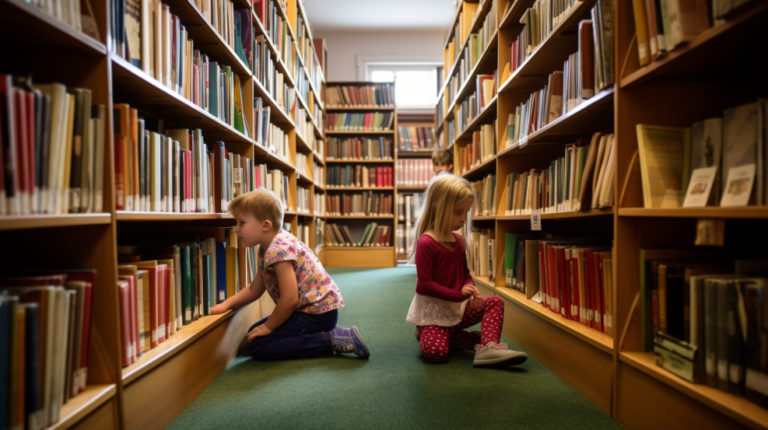
Nurturing Young Minds: How Library Visits Enhance Children’s Mental Well-being

Going to a library can have several positive effects on children’s mental health. Here are some ways in which visiting a library can contribute to their well-being:

  1. Reading and Cognitive Development: Libraries offer a wide range of books suitable for different age groups. Reading helps children develop language skills, expand their vocabulary, and enhance their cognitive abilities. Engaging with various genres and topics stimulates their imagination and critical thinking.
  2. Stress Reduction: Libraries provide a calm and quiet environment that can serve as a refuge from the often busy and noisy outside world. This peaceful atmosphere can help reduce stress and anxiety in children, allowing them to relax and focus.
  3. Imagination and Creativity: Exposure to diverse stories, characters, and worlds through books encourages children to use their imagination and creativity. This can be a healthy outlet for self-expression and problem-solving.
  4. Social Interaction: Libraries often host events such as storytelling sessions, book clubs, and workshops. Participating in these activities gives children the opportunity to interact with their peers, make new friends, and develop social skills.
  5. Self-Esteem: Accomplishing reading goals, understanding complex stories, and discovering new interests in a library setting can boost a child’s self-esteem. It gives them a sense of achievement and confidence in their abilities.
  6. Stimulating Curiosity: Libraries are treasure troves of knowledge on a wide array of subjects. Browsing books on different topics can spark children’s curiosity and encourage them to explore new areas of interest, fostering a lifelong love of learning.
  7. Time Management: Planning library visits and managing time to read books encourages children to develop organizational and time management skills, which are important for their overall well-being.
  8. Escape and Coping Mechanism: Reading can serve as a healthy escape from everyday challenges. Children can find solace in the stories they read and relate to characters who overcome difficulties, providing them with valuable coping mechanisms.
  9. Educational Support: Libraries often provide resources such as homework help, educational games, and research materials. These resources can support children’s academic growth and reduce academic stress.
  10. Family Bonding: Visiting the library as a family can be a positive bonding experience. Parents and caregivers reading with children can enhance their emotional connection and communication, fostering a supportive environment.
  11. Mindfulness and Focus: Reading requires concentration and focus, which can promote mindfulness. Engaging with a book’s content can help children stay present and fully immersed in the reading experience.
  12. Emotional Development: Books often deal with complex emotions and moral dilemmas. Reading these stories can help children develop empathy, understand different perspectives, and navigate their own emotions.

Incorporating library visits into a child’s routine can provide them with a wealth of mental and emotional benefits, promoting their overall well-being and personal growth.

In an era where stressors can weigh heavily on young minds, the library serves as a sanctuary, a retreat into a world of calm contemplation. The act of reading itself becomes a form of mindfulness, fostering focus and presence. The stories they encounter become friends, mentors, and a means of understanding themselves and others. Library visits empower children, cultivating self-esteem through reading accomplishments and exposing them to a diverse array of stories and characters. As they interact with peers in library events, they learn the art of communication and the value of community, nurturing skills that will serve them throughout life.

Moreover, library visits offer families a chance to bond over shared stories, promoting open dialogue and emotional connection. The library becomes a shared experience, a source of precious memories that families can treasure.

Open post

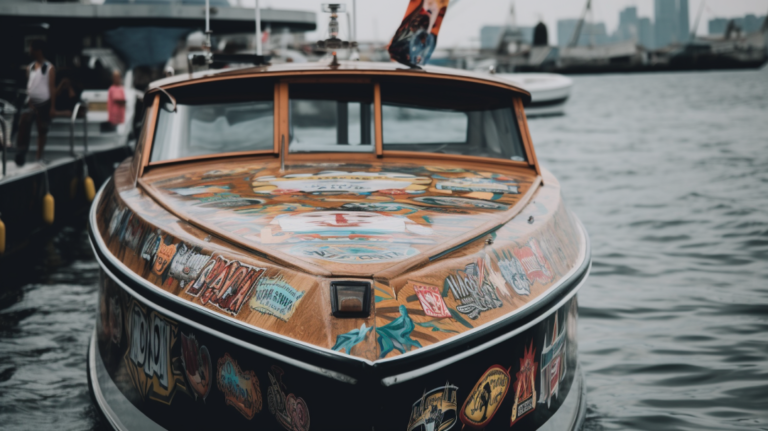
The Artistry of Stickering: Exploring the Connection Between Stickers and Art

In the realm of artistic expression, one might not immediately associate stickers with traditional forms of art. However, delve deeper into the world of stickering, and you will discover a captivating art form that has taken root in contemporary culture. Stickers, once mere adhesive labels, have transcended their utilitarian purpose to become powerful tools of self-expression and creativity. In this article, we explore the connection between stickers and art, unraveling their artistic dimensions, cultural significance, and the techniques employed by sticker artists.

The Evolution of Stickering as an Art Form

Stickers have a long and fascinating history that predates their emergence as an art form. Initially, stickers were primarily used for practical purposes, such as labeling objects or conveying essential information. However, as their popularity grew, so did their potential for artistic expression. Artists began to view stickers as miniature canvases, offering a unique platform to showcase their creativity and spread their visual messages.

Over time, stickers became more than just eye-catching designs; they evolved into cultural artifacts, representing various subcultures and ideologies. From political movements to underground music scenes, stickers acted as vehicles for communication and identity. Street artists embraced stickering as a means to engage with the public, creating provocative and thought-provoking pieces that challenged societal norms and conventions.

The Artistic Techniques of Sticker Artists

Sticker artists employ a wide range of techniques to create their pieces, showcasing their artistic prowess within the constraints of a limited space. These techniques include:

1. Hand-drawn Stickers

Some artists prefer the raw and personal touch of hand-drawn stickers. Using markers, pens, or even spray paint, they meticulously create intricate designs, characters, or typography on adhesive paper. This method allows for a truly unique and customized approach, where each sticker becomes a one-of-a-kind work of art.

2. Stencil-based Stickers

Stenciling is a popular technique in the world of street art, and it has found its way into the realm of stickering. Artists use pre-cut stencils to apply their designs onto stickers, allowing for quick and efficient reproduction of their artwork. Stencil-based stickers often feature bold imagery and strong visual impact.

3. Collage Stickers

Collage stickers involve combining different images, textures, and patterns to create visually dynamic compositions. Artists utilize magazines, newspapers, and various printed materials as their source material, cutting and arranging the elements to form a cohesive and captivating design. Collage stickers offer endless possibilities for experimentation and juxtaposition.

4. Digital Stickers

With the advent of digital technology, sticker artists have embraced the digital realm as a canvas for their creations. Using graphic design software, they manipulate images, typography, and colors to craft intricate digital sticker designs. These stickers can be printed and shared physically or distributed in virtual spaces such as social media platforms.

5. Wheatpaste Stickers

Wheatpasting is a technique that involves applying a mixture of wheat flour and water to affix stickers to surfaces. This method provides a strong adhesive bond, allowing the stickers to withstand various environmental conditions. Wheatpaste stickers are often used for large-scale installations, transforming urban landscapes into immersive art galleries.

Cultural Significance and Impact

The rise of stickering as an art form has had a significant impact on contemporary culture. Stickers act as visual signifiers, communicating messages, affiliations, and beliefs. They serve as a means of self-expression, allowing individuals to assert their identities and engage with the world around them.

Stickers have also become a powerful tool for social and political activism. They can convey powerful statements and provoke discussions on critical issues. From promoting environmental awareness to advocating for human rights, stickers have the potential to spark change and unite communities.

Furthermore, stickering transcends geographical boundaries. Artists and enthusiasts from around the world connect through sticker exchanges, collaborations, and online platforms, fostering a global community of creativity and artistic exchange.

Conclusion

In conclusion, stickering has undoubtedly emerged as a unique and compelling art form. From their humble beginnings as adhesive labels, stickers have transformed into powerful tools of self-expression and creativity. Through various artistic techniques and cultural significance, sticker artists are pushing the boundaries of traditional art forms and engaging with audiences in unconventional ways. As stickering continues to evolve, it will undoubtedly leave an indelible mark on the world of art. So next time you come across a sticker adorning a street corner or a public space, take a moment to appreciate the artistic journey it represents and the story it tells.

Open post

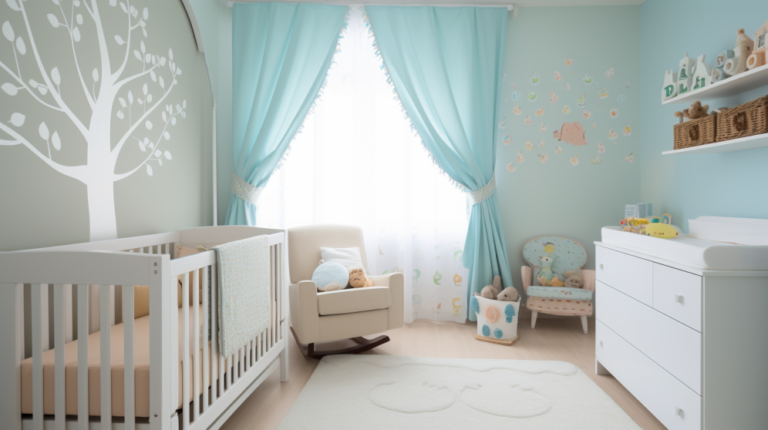
Designing a Dream: Our Experience Creating Art for a Baby Nursery

When we found out we were expecting a baby, we couldn’t wait to start creating a special space for our little one. We spent hours researching and planning every aspect of the nursery, from the color scheme to the furniture. However, we wanted something unique and personal to add to the room, and that’s when we decided to create our own art.

Inspiration Strikes

We began by brainstorming ideas and themes that would work well in a baby’s room. We looked at Pinterest, magazines, and various online stores for inspiration. Finally, we decided on a woodland theme, with cute animals and trees as our main focus.

Sketching Our Ideas

Next, we started sketching our ideas on paper. We drew different animals, trees, and other elements that we wanted to include in our art pieces. We played around with different layouts and compositions until we were happy with the final designs.

Choosing Our Medium

We knew we wanted to create handcrafted art, but we weren’t sure which medium to use. After much consideration, we decided on acrylic paint on canvas. We felt that this medium would provide the durability and longevity we wanted for our baby’s room.

Painting the Art

With our sketches and medium chosen, we started painting our art. We decided to create three pieces, each with a different animal as the main focus. The first piece was a bear surrounded by trees and mountains, the second was a fox in a field of flowers, and the third was a raccoon peeking out of a tree hollow.

Learn More.

The Final Touches

Once the paintings were complete, we added some final touches to tie the room together. We used twine to wrap around the canvas edges, giving them a rustic feel. We also added some wooden frames to the art pieces, which added a touch of elegance and completed the look.

A Unique and Personal Nursery

The art pieces we created added a unique and personal touch to our baby’s nursery. They gave the room character and made it feel like a special space that was created just for our little one. Whenever we walk into the room, we feel proud of what we accomplished and happy that we created something that our baby can grow up with.

Conclusion

Creating art for our baby’s nursery was a wonderful experience that allowed us to showcase our creativity and love. It was a reminder that sometimes the most meaningful things are the ones that we create ourselves. We hope that this story inspires other parents-to-be to create their own art pieces and make their baby’s room extra special.

Open post

The Art of Making a Living: How Artists Thrive in Today’s Economy

As an artist, making a living from your craft can be a challenging endeavor. The traditional model of selling artwork through galleries is no longer the only option, and artists must be creative in finding new ways to generate income. In this article, we will explore the various strategies that successful artists use to earn a living from their art.

Selling Artwork

Selling artwork remains the primary way that artists make a living. Artists can sell their work through galleries, art fairs, online platforms, or directly to collectors. However, competition is fierce, and artists must have a strong body of work, excellent marketing skills, and a pricing strategy that reflects the value of their art. Many artists also turn their artwork into other items that can be sold such as stickers or t-shirts.

Teaching

Teaching is another way that artists can make a living. Many artists teach classes or workshops in their medium, either independently or through institutions such as universities or art centers. Teaching provides a steady income and allows artists to share their skills and knowledge with others.

Licensing

Licensing artwork involves selling the right to use an artist’s work for a specific purpose, such as on products or in advertising. Licensing deals can provide a passive income stream for artists, as they receive royalties for each use of their artwork. However, artists must be careful to negotiate favorable terms and ensure that their artwork is being used in a way that aligns with their values.

Crowdfunding

Crowdfunding platforms such as Kickstarter or Patreon have become popular ways for artists to fund their projects and generate income. Crowdfunding allows artists to connect with their audience directly and provides a way for supporters to contribute to their favorite artist’s work. However, crowdfunding campaigns require careful planning, marketing, and an engaged fan base to be successful.

Diversifying Income Streams

Many successful artists have found that diversifying their income streams is the key to making a living from their art. By combining different strategies such as selling artwork, teaching, licensing, and crowdfunding, artists can create a sustainable income that supports their artistic endeavors. Additionally, many artists have found success in creating passive income streams such as selling prints or licensing their artwork for products.

Conclusion

Making a living from art is a challenging but rewarding endeavor. By combining different strategies, artists can create a sustainable income that supports their artistic vision. The key to success is to be creative, persistent, and willing to adapt to changing market conditions. Whether it’s selling artwork, teaching, licensing, or crowdfunding, there are many ways for artists to turn their passion for art into a viable career.

Open post

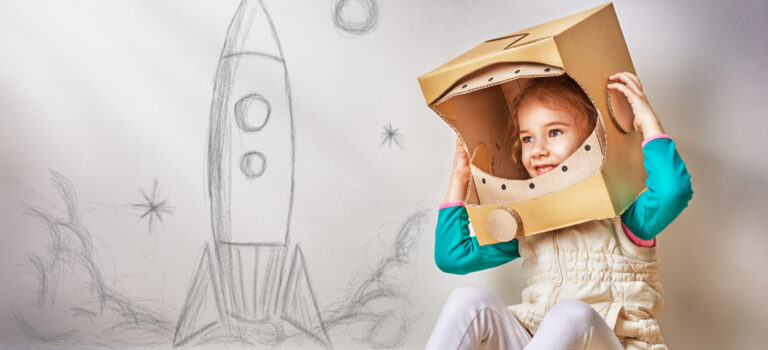
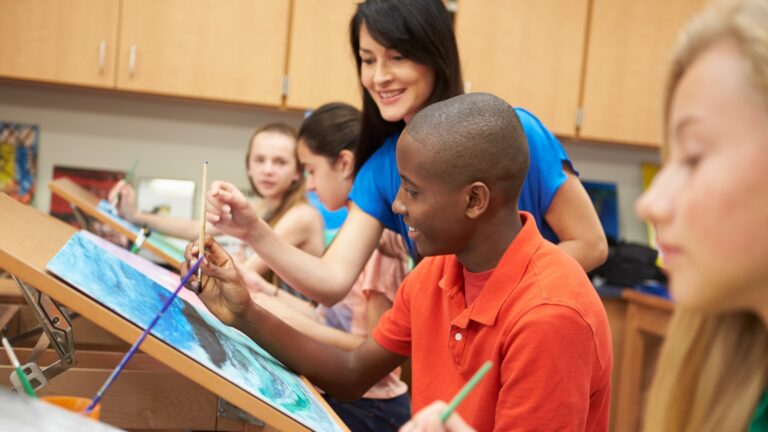
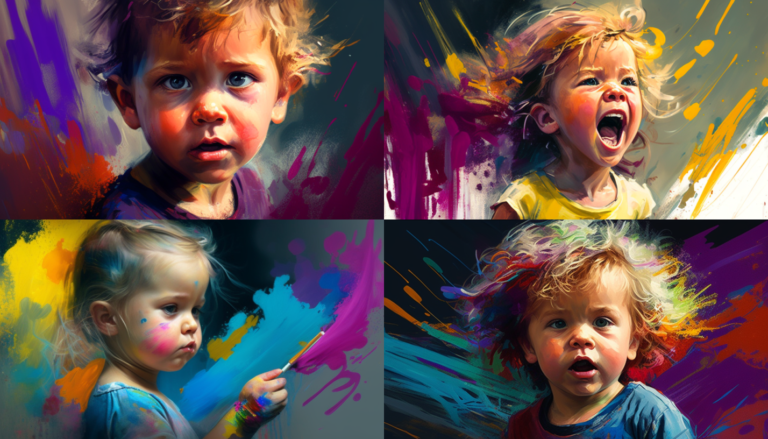
How Art is Good for Children’s Mental Development

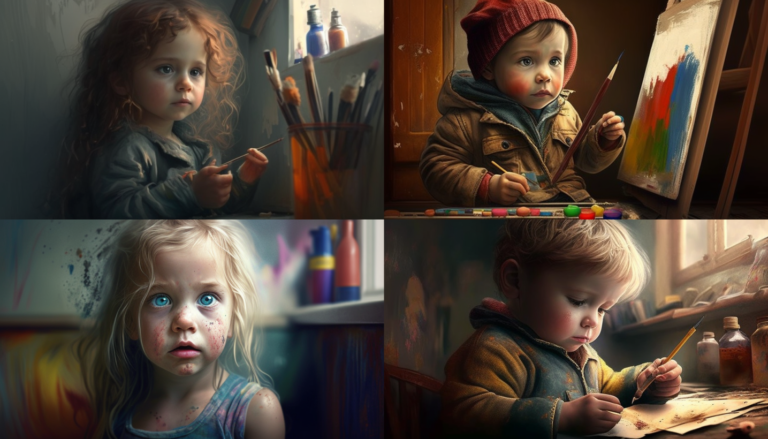
Art is often seen as just a fun activity for children to do, but it is so much more than that. Art has been shown to have numerous benefits for children’s mental development, including improved creativity, problem-solving skills, and emotional regulation. In this article, we will explore how art can help children’s mental development and provide tips for parents and educators to incorporate art into children’s lives.

The Importance of Art in Children’s Lives

Art is a form of self-expression, and for children, this can be an important outlet for their thoughts and feelings. Through art, children can explore their emotions and express them in a safe and non-threatening way. This can be particularly helpful for children who struggle with verbal communication or have difficulty expressing their emotions.

Art can also help children develop their creativity and imagination. By creating art, children are encouraged to think outside the box and come up with new and innovative ideas. This can be useful in all areas of life, not just in art-related fields.

The Benefits of Art on Mental Development

Improved Problem-Solving Skills

Creating art requires children to think critically and problem-solve. They may need to decide what materials to use, how to arrange them, and how to achieve the desired effect. This can help children develop their problem-solving skills and improve their ability to think critically.

Increased Emotional Regulation

Art can be a therapeutic activity for children, helping them to regulate their emotions and reduce stress. When children create art, they are often in a state of flow, which is a state of deep focus and concentration. This can be calming and help children regulate their emotions.

Boost in Self-Esteem

When children create art, they have a sense of accomplishment and pride in their work. This can boost their self-esteem and confidence, which can carry over into other areas of their lives.

Improved Fine Motor Skills

Creating art often requires fine motor skills, such as gripping a paintbrush or manipulating clay. By engaging in art activities, children can improve their fine motor skills, which can be useful in all areas of life.

Tips for Incorporating Art into Children’s Lives

Provide Art Supplies

Make sure children have access to a variety of art supplies, including paint, markers, crayons, clay, and paper. This will allow them to experiment with different materials and find what they enjoy the most.

Encourage Creativity

Encourage children to be creative and come up with their own ideas. Avoid giving them strict instructions or guidelines, as this can stifle their creativity.

Display Artwork

Displaying children’s artwork can be a great way to boost their self-esteem and make them feel proud of their creations. Consider framing and hanging their artwork or creating a special art display area in your home or classroom.

Incorporate Art into Learning

Art can be incorporated into other areas of learning, such as science or social studies. For example, children can create art projects related to the solar system or historical events.

Make it Fun

Above all, make art a fun and enjoyable activity for children. Encourage them to experiment and explore different materials and techniques. Avoid putting too much pressure on them to create a perfect masterpiece, as this can be stressful and counterproductive. You can create custom stickers which are fun and unique for children.

Conclusion

In conclusion, art is an important activity for children that can have numerous benefits for their mental development. By providing children with art supplies, encouraging creativity, and incorporating art into learning, parents and educators can help children reap the benefits of art. So next time you’re looking for an activity for your child, consider breaking out the art supplies and letting them create something beautiful.

Open post

How Art Helps with Child Development

Artistic expression is paramount in the development of young children, as it has been shown to enhance brain function during early childhood. Children are able to engage in open-ended play through artistic activities, which facilitates the development of cognitive, multisensory, and socio-emotional skills. As children advance to elementary school and beyond, artistic activities continue to play a crucial role in brain development, self-esteem, creativity, and mastery.

Nurturing creativity in children is fundamental in allowing them to express their unique ideas and experiment with a range of materials. Encouraging creativity requires providing children with a diverse array of supplies and allowing them to create freely, while also observing them and providing additional supplies when required. Encouraging children to try new artistic experiences can also foster creativity, with open-ended questions enabling children to consider the possibilities of what they can create.

Artistic activities introduce children to various tools and materials and offer them the opportunity to create using their own unique vision. As children draw, paint, and create collages, they learn about color, shape, and size. Engaging with paints, glue, and markers facilitates planning, experimentation, and problem-solving skills. Mixing paints teaches children about cause and effect and allows them to make decisions about their artwork, which enables them to learn from their choices.

Artistic expression is an avenue for children to communicate their emotions and ideas. Through their artwork, children are able to articulate their feelings and thoughts, which they may not be able to do with words. Artistic expression is a valuable way to assist children in managing the natural stressors of growing up, in addition to fostering a sense of individuality, self-respect, and appreciation for others’ work.

Artistic activities also promote the development of physical skills in children. Using scissors, finger-painting, and weaving with yarn help refine the small muscles in children’s hands, which is essential for their fine motor control, necessary for writing, and other activities requiring dexterity. Along with drawing with crayons or markers, artistic activities promote the development of fine motor skills.

Open post

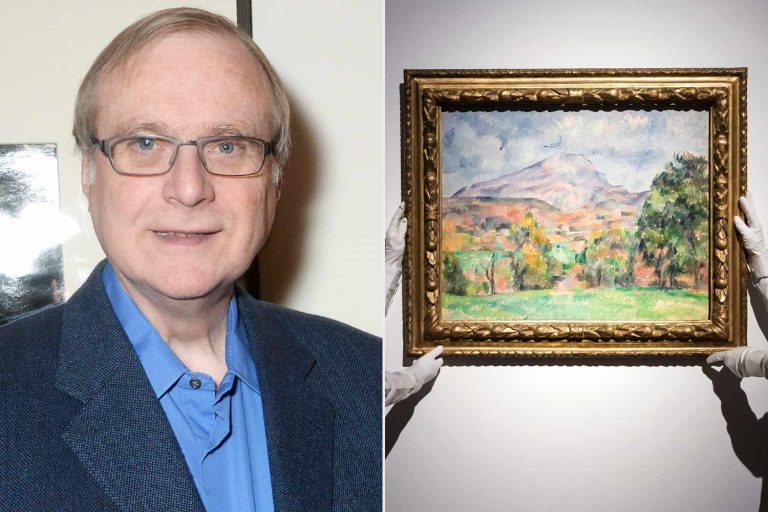
Paul Allens Art Collection Sells for $1.6B

Introduction

Paul Allen is known for his massive collection of art and collectables, which he amassed over 20 years. Now, the art world has a new record-setter:

This week, a $1.6 billion sale at Christie’s was the most valuable ever auctioned by a single owner in history.

The proceeds will go to philanthropic causes, including research into brain cancer that killed Allen himself just last month.

Art amassed by late Microsoft co-founder over two days of sales this week

 at Christie’s, Paul Allen made more than $1.6 billion.

Last week, the late Microsoft co-founder Paul Allen made a record for the most expensive single-owner art collection ever sold at auction when he raked in more than $1.6 billion at Christie’s over two days of sales. But which pieces have fetched the most?

  • A painting by French artist Claude Monet, “Le Bassin aux Nymphéas” (1914), sold for $110 million.
  • A sculpture called “Le Penseur” (1931) by Auguste Rodin was purchased for $95 million.

The most expensive of the 60 auctioned works of art was Georges Seurat’s “Les Poseuses, Ensemble (Petite version)”.

One of the most valuable paintings sold during the event was Georges Seurat’s “Les Poseuses, Ensemble (Petite Version),”  which fetched $149.24 million, including fees.

The work was created in 1890 and is part of a series of works by Seurat called the “Gardens.” It broke the artist’s previous auction record, set at Christie’s in New York City when his painting “Sunday Afternoon on the Island of La Grande Jatte” sold for $60 million in 2012.

La Montagne Sainte-Victoire by Paul Cézanne sold for $137.8 million, more than double the artist’s previous auction record.

The highest-priced work of art sold at auction was Paul Cézanne’s “La Montagne Sainte-Victoire,” which sold for $137.8 million.

The sale almost doubled the artist’s previous record, set in 1990 when his “Nu au coussin bleu (Madame Cézanne)” sold for $48.4 million.

Cézanne is a French artist born in Aix-en-Provence who worked in Paris during the 19th century and is widely considered one of the most influential artists of all time.

The priciest pieces were sold at a Wednesday night auction.


The most costly lots were sold during a Wednesday night auction that featured 60 of Allen’s collection’s most priceless items and brought in a combined $1.5 billion. On Thursday, other properties went up for auction and made roughly $116 million.

The artwork sold for the most incredible money on Thursday wasClaes Oldenburg’s sculpture “Typewriter Eraser, Scale X,” which fetched $8.4 million as one of 95 artworks from Allen’s collection that went to auction Thursday and Friday at Christie’s Rockefeller Center headquarters in Manhattan. 

“Allan had an incredible eye for quality,” said Brett Gorvy, chairman of Christie’s and international director of post-war and contemporary art. “He was always buying into the best artists at the top end of their market.”

Forbes Evaluation estimated Allen was worth $20.3 billion in 2018, the year he died.

According to Forbes, Allen was worth $20.3 billion in 2018, the year he died, making him the 44th richest person in the world.

Allen didn’t start collecting art until the early 1990s

“Paul was always a late adopter,” Deborah Gunn, associate director of art finance at Vulcan, Allen’s investment management company, told CNBC.

“He started collecting in the early 1990s when he visited the Tate Modern in London and realized he could own world-class artwork too.

 His taste was varied, and his collection spans more than 500 years of art history, from Botticelli to McArthur Binion.”

Allen’s pointillism collection includes works by Seurat and Signac — both hallmarks of this style.

He also had a penchant for landscapes, particularly scenes from Venice (the auction includes eight).

“I’m not sure if I’ll ever really know why Paul liked these particular paintings,” said Gunn. “But what I do know is that Jasper Johns’ numbers allowed him to think about coding.”

Conclusion

Paul Allen’s death was a sad loss for the world, but it’s good to see his legacy live on in this way.

His collection of art and collectables has been sold for a record-breaking $1.6 billion, and many of the buyers are new collectors who might not have been able to afford these pieces if they had not been acquired at auction. It will be fascinating to observe what takes place next with them.

“The Dirty Charm” Richard Paul Davis & Hank Van Hawkins

Richard Paul Davis and Hank Van Hawkins create “The Dirty Charmers” and hit the road

Most of you reading this will fondly remember an extraordinary band known as the Texas Red Legs.  “Black Sky Growl”, “Burnin’ Down 35″ & “Chaste Machine” in their originality and passion, were all songs that left the audience (and especially) our ArtLoveMagic family screaming for more.  Here is our ‘more’, people.  Richard Paul Davis and Hank Van Hawkins team up to bring you a true Texas duo, ‘The Dirty Charm’.  Their official press release is as follows.  Spread the word!

The Dirty Charmers begin their performance collaboration at the Brett Dillon of KHYI 95.3 the Range’s hosted “bike and Mic night “at Main Street Liquid Company Richardson Texas.

Richard Paul Davis, currently of the Dallas Americana act ‘The Lost Immigrants’ and formerly of the Texas Red Legs, has joined Hank Van Hawkins in a songwriting, mobile performing song-swapping two-man duo titled ‘The Dirty Charm’. Their upcoming shows of note are below:

  • Brett Dillon’s Bike and Mic night at main street liquid company Richardson TX.

August 17th at 7pm. They will be opening for members of the Tejas Bros. 115 East Main Street
Richardson, TX 75081

  • August 19th at the Tap-in Grapevine Texas 7:30 pm. 120 south mains street Grapevine Texas. 75067
  • 10/22/2022 8:00 PM Roots Coffeehouse North Richland Hills, TX, US
  • 9/25/2022 8:00 PM tap-in 120 main street grapevine Texas 75067 Grapevine, TX,
  • 9/23/24/2022 7:00 PM Coffee Rules Hays, KS,

Media & Press Information

Please contact, or view the below sites.

  1. The Dirty Charmers on Facebook

The Dirty Charmers came together by happenstance more or less. It was a chance meeting bringing two very different and eclectic songwriters each with their own different and unique voices together in the same band for the same purpose and with similar creative goals already in mind. Thus the Dirty Charm was born.

Hard luck lots prove to be the most fertile of ground for songwriters although it is not a path one can take by choice, so much as it is a path some have had no other choice than to walk down. These vagabonds and troubadours seem to have had no other choice than to be outlaws and outcasts of some sort, considering all the combined years of experience, hardships and tragedies that stand as a muse between the two of them. Rightfully so the truth keeps them hell bent on expressing and exposing truths so that nothing else remains to be sugar-coated.

Rock and Roll is indeed a dirty business and the Dirty Charmers have been buried up to their necks in it for years now. With a healthy sense of adventure and a bad case of morbid curiosity, they remain on the hunt for the next song.

Creatively speaking they are a perfect storm of sorts bringing slow and brooding together with fast and bitter. Culminating at the crossroads where myth meets the magic and brewing deep within the underground where legends are born through trials of fire.

The mission is to bring integrity and substance back to what was once a legendary music scene.

THIS IS TRUE… there’s energy in collaboration

20 poems to 20 visual artists. Today was the day that the painters on the THIS IS TRUE show picked up their boards and received the poems they’ll be interpreting.

post by Michael Lagocki

What’s really TRUE is I overbook myself. It’s a curse. I’m producing like 100 shows right now, managing a few personal art projects, and trying to get artlovemagic further off the ground, and (oh yeah) I need to find some time to make some money here and there so you don’t see me standing at a stoplight trying to wash your car windows between greens.

I mention this not (just) for sympathy, but really to explain how jazzed I am about THIS particular show. THIS IS TRUE is something special, something new for us. It’s giving me fuel to keep going through a very busy schedule and still be enthusiastic.

Each artist has been given a primed board that they will use to create their artwork, making this the first artlovemagic gallery exhibit where each piece is of uniform size and shape.

20 poems to 20 different visual artists. Sounds simple, but it’s a treasure chest of experiences. 20 new collaborations between artists who haven’t worked together before. 20 opportunities for local poets to see their work interpreted as visual art. 20 new pieces of original art, each created just for this show.

The artists and poets won’t even meet each other until the gallery is hanging. Each one of them is collaborating with someone, they just don’t know who that anonymous author or artist is… yet.

Exciting. Energizing.

I love stuff like this. We set it rolling and you have no idea what’s going to happen. Who’s going to bring their A game? (hopefully all of ‘em) Who’s going to be inspired, and in turn, inspire someone else with what they produce? Who’s going to find something new that becomes part of who they are as an artist (or a writer) from here forward?

Artist Ashley Jones gets her first read of the poem that she’ll be interpreting into a work of art.

The Show goes up on September 2nd. That means from the 3rd all the way until the 18th you can see it for free at the Janette Kennedy Gallery. That Saturday night we’ll celebrate it all with a live show (and yes, we have a few surprises in store there, too).

Stay tuned on this one.  In the weeks leading up to the show, we intend to post some of the poetry and some photos of the art as it’s progressing. Kind of a backstage pass kind of thing. I suspect it will be interesting to watch how it all comes together.

Truthfully,

-ML

Kids Music Workshop

This morning, ArtLoveMagic hosted its first ever kids music workshop. While we’ve done this with visual art before, this was the first time we were able to do it for music.

The workshops are in partnership with the Deep Ellum Foundation and special thanks goes to Jeanne Blanton who made a donation to specifically underwrite them.

Deborah Driscoll–ArtLoveMagic’s music director–arranged the day. The kids were in groups of 5 and they rotated through 20 minute classes. The directive was simple. Do something that inspires and make sure it is hands on.

Kelly Nygren taught percussion. Not only did she have multiple instruments for each of the students to try, but she also taught us that we all have rhythm in our pulse, heartbeat and breathing. She showed us that anything could be an instrument, and she made waterbottles filled with rice that the kids could take with them as shakers.

As it was, the shakers turned out handy in Tony Cherry’s songwriting class. Not only did the groups learn to write songs through word associations, descriptions, and daily life stories, but in a couple of classes they pulled out the shakers and sang along.

In guitar class, we learned about the difference in electric and acoustic, the different parts of the guitar and about chords. We also learned to “play loud and play proud.”

Melody Cherry taught us how to breathe in order to use our bodies as instruments. After some warm up and practice at holding notes, the kids were able to get onstage with the microphone and perform.

In Ms. Delphi’s piano class, there were three keyboards and we learned that “Jack and Jill” (the two black keys close together) were near C, D, E and the “Three Little Pigs” (three black keys together) were next to F, G, A, B.

Isaac Davies taught about how Hip Hop started from sampling records and how those samples are linked together to make new music. The kids were albe to play with the sampler and Isaac even taught a bit about freestyling and showed off his skills.

After the classes, the students had pizza, then when that group left, the others arrived and teachers and volunteers set up to do it all again.

Many thanks to Life in Deep Ellum for providing the venue, all the teachers and volunteers who walked kids from class to class, set up chairs and made sure even the most timid weren’t left out.

For ArtLoveMagic, days like this are about passion. As public schools are cutting art and music programs, we are becoming stronger and stronger advocates for the power of the arts. We all remember our own introduction to paints, instruments, color and song. We are brighter more beautiful people because of it and it was very, very fun to share that.

–Cathy Hutchison

note- we’d also like to extend thanks to Jeanne Blanton, The DEF, and Mayor Pro Tem Caraway’s staff for supporting this event.

Posts navigation

1 2 3 4 5 6
Scroll to top